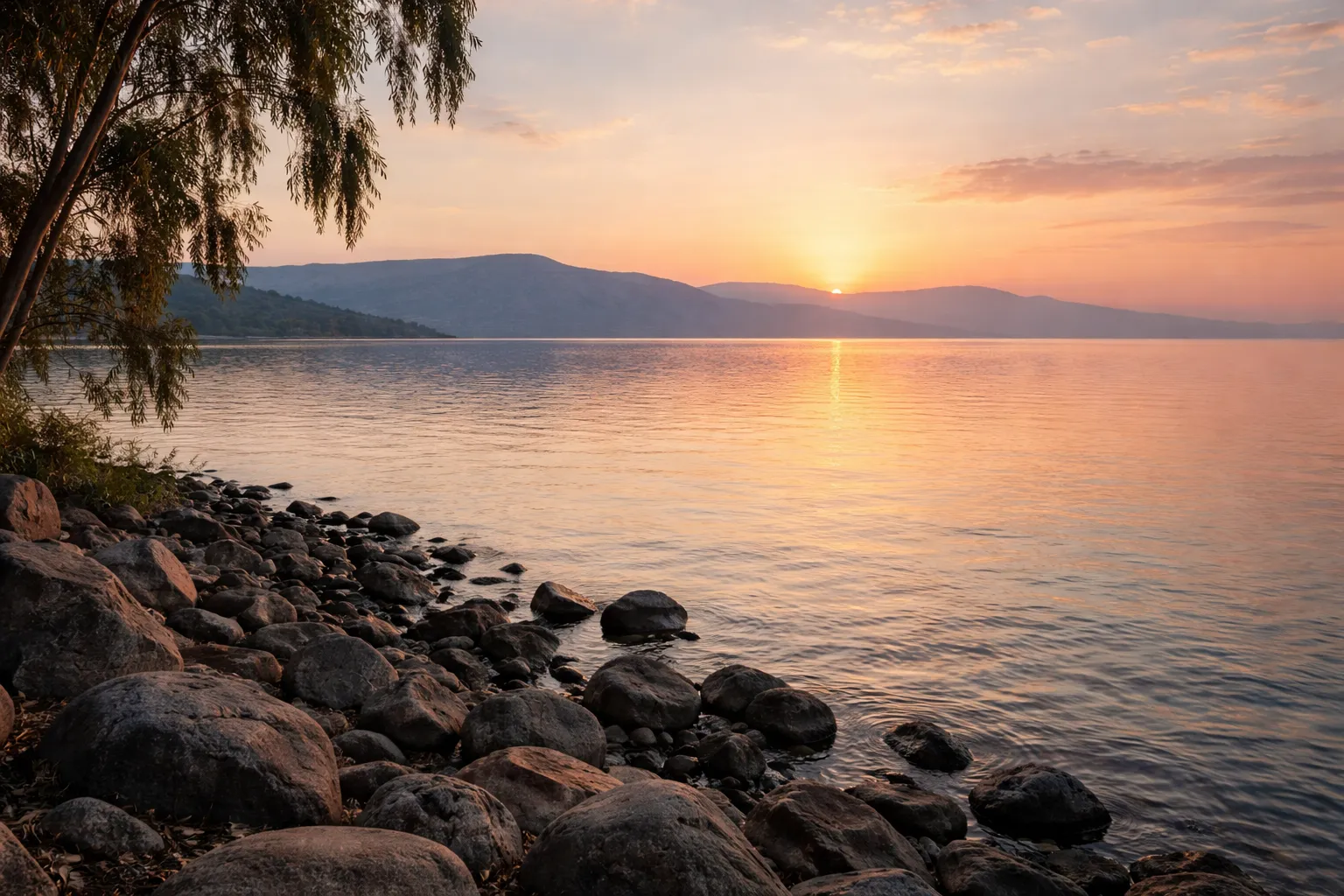
There is a moment that happens to almost everyone on a first visit to the Sea of Galilee. You are standing at the water’s edge, probably early in the morning, and the lake is perfectly still. You can hear birds. You can smell the water. And then it hits you: this is the same water. Not a replica, not a memorial. The same lake where Peter fished all night and caught nothing. The same shore where Jesus stood and called to him across the water.
That is what the Holy Land does. It collapses the distance between you and the biblical text in a way that no sermon, commentary, or Bible study ever quite manages. This guide is for pastors and church leaders who are considering taking their congregation there, and want to understand the spiritual dimension of the journey before they go.
Why pilgrimage still matters
Pilgrimage has a long history in Christianity, though many Protestant traditions treat it with some suspicion, as if the physical act of travel implies something superstitious about geography. It does not. The value of visiting the Holy Land is not that certain places are holier than others. It is that human beings are embodied. We think differently when we are standing in a place than when we are reading about it.
The disciples understood this. After the resurrection, two of them were walking the road to Emmaus when Jesus joined them, and they did not recognize him. They were so deep in their grief and confusion that they could not see what was in front of them. Then he broke bread, and “their eyes were opened” (Luke 24:31). The moment of recognition came not through argument or explanation, but through a physical act in a physical place.
That is what you are hoping for when you take your congregation to Israel. You want their eyes opened. You want the stories they have heard a hundred times to become real in a new way. And the Holy Land, for all its crowds and tour buses and souvenir shops, still delivers on that.
Your job as a pastor-leader is to prepare them for it.
Preparing your heart before you go
The mistake most groups make is treating the preparation as logistical. They sort out passports and packing lists and room assignments. Those things matter, and if your church is still in the early stages of budgeting, a clear cost breakdown for church pilgrimages will help your leadership set realistic expectations before the spiritual planning even begins. But the spiritual preparation is what determines whether the trip transforms your congregation or just entertains them.
Start six to eight weeks out. Read through one of the Gospels together, ideally Luke or John, and pay attention to geography. Notice how often Jesus moves from Galilee to Jerusalem and back. Notice the rhythm of withdrawal and engagement, the mountain retreats and the crowded city moments. When you read the feeding of the five thousand, look up where Tabgha is on a map. When you read the arrest of Jesus, read the passage with a mental image of the Kidron Valley at night.
Assign members of your group to specific sites. Ask one person to prepare a five-minute reflection on the Via Dolorosa. Ask another to prepare a reading for the Garden of Gethsemane. This does two things. It gives everyone a sense of ownership, and it means that when you arrive at each site, someone in your group has been praying and thinking about that specific place for weeks.
Psalm 122 opens with a line that has sent Jewish and Christian pilgrims toward Jerusalem for three thousand years: “I was glad when they said to me, ‘Let us go to the house of the Lord’” (Psalm 122:1). Read it together before you leave. It is short, it is honest, and it names the gladness that a lot of your congregation will be feeling but may not know how to express. For a fuller walkthrough of the organizational side of getting a group to Israel, including how to rally your church around the vision, our guide on how to plan your church’s Israel trip covers that ground in detail.
One more thing: tell your group, explicitly, that they are allowed to feel whatever they feel. Some people weep at the Garden Tomb. Some people feel almost nothing and are embarrassed by that. Both responses are fine. The Spirit works differently in different people, and a pilgrimage is not a spiritual performance.
The Sea of Galilee
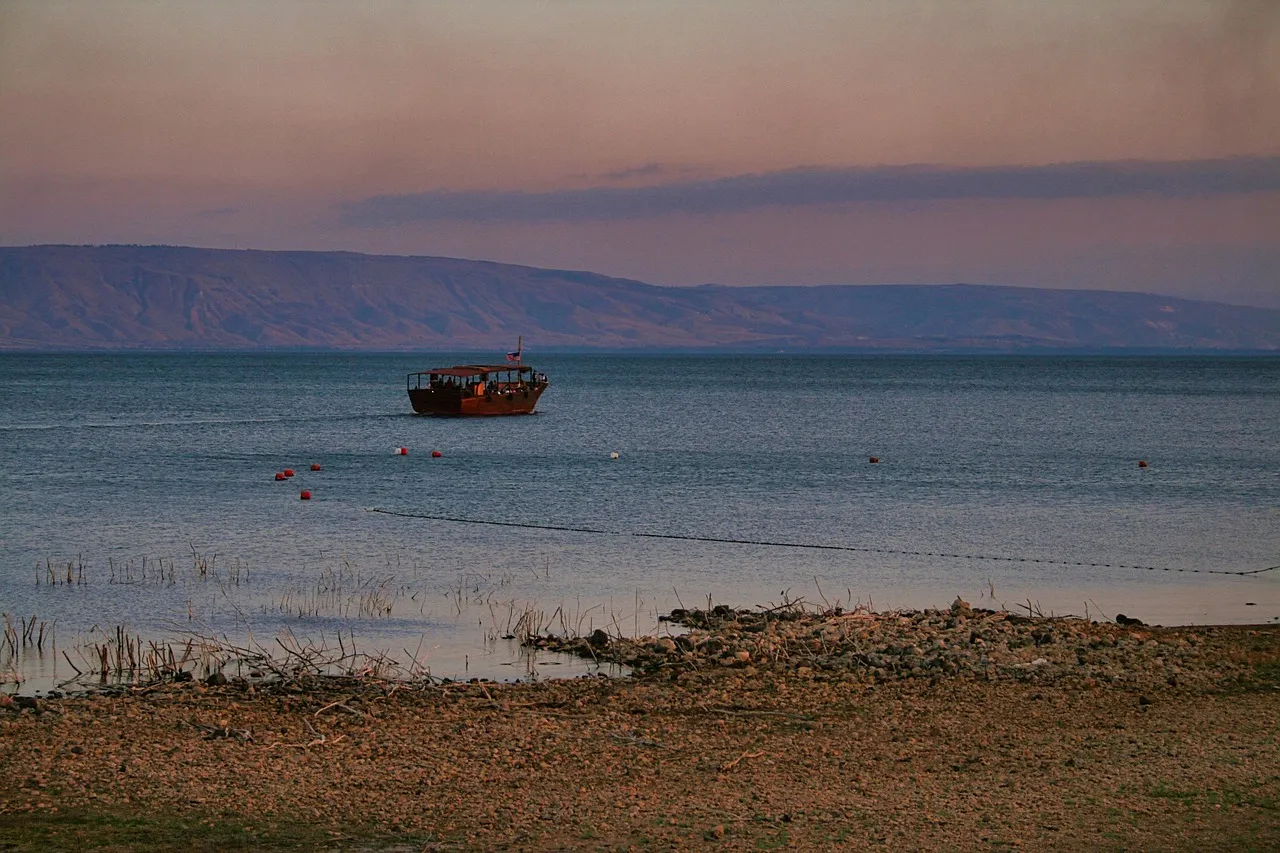
The Sea of Galilee is where most pilgrimage itineraries begin, and there is wisdom in that. It is quieter than Jerusalem. The pace is slower. It gives your group time to settle into the land before the intensity of the holy city.
The lake is about thirteen miles long and eight miles wide. You can see the whole thing from most shoreline points. In the early morning, before the tour boats go out, the water is gray-blue and the hills on the opposite shore catch the first light. You can understand immediately why the Gospels keep returning to this landscape.
Tabgha is where tradition places the multiplication of the loaves and fishes. The Church of the Multiplication has a fourth-century mosaic floor that is largely intact, with fish and bread rendered in small colored tiles. It is not grand. The building is modest and the site is quieter than many. But standing there and reading John 6:11, “Jesus then took the loaves, and when he had given thanks, he distributed them to those who were seated,” takes on a different quality when you are standing on that floor.
The Mount of Beatitudes sits above the lake’s northwestern shore. The church there was built in the 1930s and the grounds are carefully maintained. Your group will want to find a spot on the hillside and read Matthew 5 aloud. The acoustics of the hillside are natural and good. Every voice carries. It is easy to imagine how a crowd gathered here once listened to a teacher who sat down to speak.
Capernaum is a short drive along the shore. This was Jesus’ base in Galilee, the town he adopted as his own. The ruins of a first-century synagogue sit beneath the remains of a later Byzantine one, and scholars believe the first-century synagogue is where Jesus taught and healed the man with an unclean spirit (Mark 1:21-28). There is also a fourth-century house church built over what tradition identifies as Peter’s home. You can look down through glass floors to the original basalt stone walls below. It is one of those moments where the layers of history pile up and become almost too much to hold at once. If you want to go deeper on the excavations here and at other sites before your group arrives, what archaeology has revealed at these biblical sites is worth reading as part of your preparation.
A boat ride on the Galilee is worth the time. The boats are replicas of first-century fishing vessels. When the engine cuts and the guide asks the group to sit in silence on the open water, something happens. You hear nothing except the water and wind. Your congregation will think of the night the disciples were caught in a storm, and the line that followed: “Who then is this, that even the wind and the sea obey him?” (Mark 4:41). Let the silence do its work before anyone speaks.
Reflection: Where in your own spiritual life have you been rowing hard against the wind? What would it mean to let Jesus into the boat?
The Jordan River
The Jordan River baptism is often the most emotionally significant moment of a pilgrimage for congregation members who have not yet been baptized, and for many who were baptized as infants and want to make that declaration as adults.
The Yardenit Baptismal Site is on the southern end of the Sea of Galilee, where the Jordan begins its flow south. The banks are green and overhung with reeds and eucalyptus. The water is cool. The site has changing rooms, a place to buy white robes, and gradual stone steps leading into the water.
What makes it work spiritually is that it is not solemn in a formal, churchy way. It is joyful. When someone comes up out of the water, people cheer. There is an immediacy to it, a sense that something real and unrepeatable is happening.
Matthew 3:13-17 is the obvious text, but consider also Romans 6:4: “We were therefore buried with him through baptism into death in order that, just as Christ was raised from the dead through the glory of the Father, we too may live a new life.” Read it before anyone enters the water. Then step back and let the moment belong to the people being baptized.
If your group includes members who want to be baptized, coordinate with your tour operator well in advance. For a full walkthrough of the two main sites, what to expect on the day, and how to lead the ceremony as a pastor, the complete guide to Jordan River baptism covers all of it. You will want to block enough time that it does not feel rushed. The most grace-filled Jordan baptisms I have witnessed lasted ninety minutes or more, because the pastor allowed time for reflection, for the rest of the group to speak over each person, for prayer. Do not schedule something for the hour after.
Reflection: Baptism is an act of public declaration. What declaration do you most need to make to God or to your community right now?
Jerusalem: arriving at the city
The first sight of Jerusalem from the Mount of Olives is one of those moments that does not have a smooth description. The old city spreads below you, the Dome of the Rock gold in the afternoon light, the Church of the Holy Sepulchre visible behind the rooftops, the walls honey-colored in the sun. It is a lot to process.
The Mount of Olives is where Jesus wept over Jerusalem. Luke 19:41-42 records it plainly: “As he approached Jerusalem and saw the city, he wept over it and said, ‘If you, even you, had only known on this day what would bring you peace.’” Jesus loved this city and mourned over it at the same time. That tension is still present. You can feel it standing there. Spend time here before you enter the old city. Let the geography of what happened here settle in.
The Kidron Valley lies between the Mount of Olives and the old city. Jesus walked down through this valley on the night of his arrest, after leaving the upper room. You will cross it on your way into the city. It is easy to miss on a busy tour, but worth noting as you cross. This was the path.
The Garden of Gethsemane
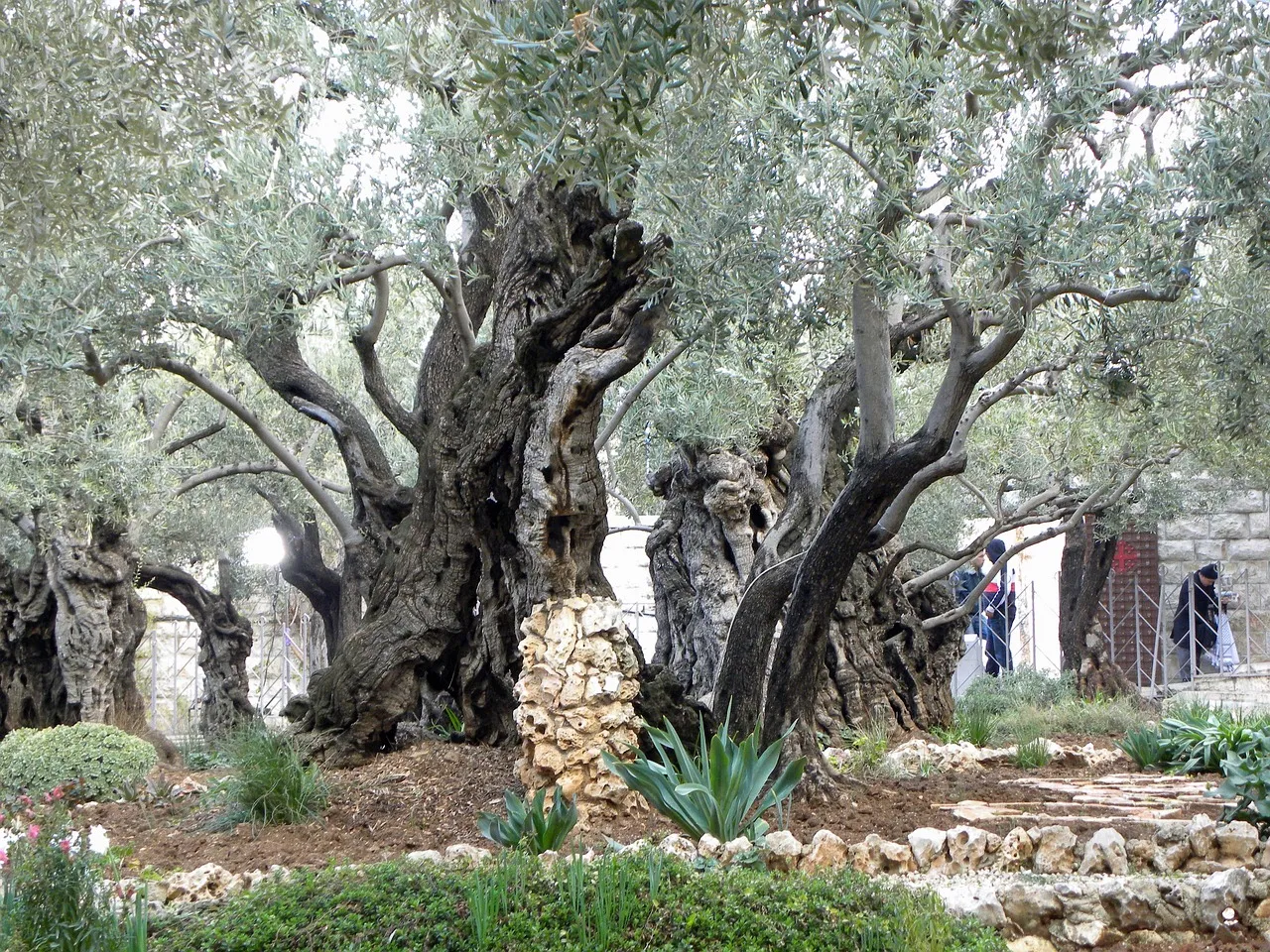
The garden is at the foot of the Mount of Olives, just across the Kidron Valley from the old city walls. The Church of All Nations sits at its edge, built over the rock where tradition says Jesus prayed the night before his crucifixion. Inside, the rock is exposed at the front of the church, and the building is kept dark enough that the mosaics on the ceiling seem to glow. The atmosphere is unlike any other church in Israel.
But the olive trees are the thing. Eight of them still stand in the enclosed garden beside the church. Olive trees in this region are extraordinarily long-lived, and there is genuine scientific debate about whether these specific trees predate the first century. They may not have been alive in Jesus’ time. But olive trees this old look ancient in a way that carries emotional weight regardless of what the dating says. The trunks are massive and gnarled, the bark silver-gray. They look like they have absorbed centuries of prayer.
Your group can enter the garden for quiet reflection. Read Luke 22:39-44 before you enter: “He withdrew about a stone’s throw beyond them, knelt down and prayed, ‘Father, if you are willing, take this cup from me; yet not my will, but yours be done.’” Then give the group fifteen or twenty minutes of silence. No talking. Just being there.
Some people find this harder than they expected. We are not accustomed to silence in our worship culture. But the garden rewards it. The prayers that happen quietly in that space often stay with people longer than any sermon.
Reflection: Jesus prayed “not my will, but yours.” What is the cup in your own life that you have been asking God to take away? Have you reached the place of surrender yet?
The Via Dolorosa
The Via Dolorosa is the traditional route Jesus walked through Jerusalem carrying the cross. It winds through the Muslim Quarter of the Old City, past spice shops and schools and ordinary street life, and ends at the Church of the Holy Sepulchre.
This surprises some visitors. They expect something solemn and set apart, and instead they find themselves on a narrow stone street with vendors selling souvenirs and schoolchildren running past. But this is, in a way, more honest than a sanitized memorial would be. Jesus carried the cross through a city that did not stop for him. Life continued around him. The same is true on the Via Dolorosa today.
The fourteen Stations of the Cross mark points along the route. Not all of them have solid historical basis. Some are devotional traditions that developed in the medieval period rather than anchored in specific Gospel events. A good guide will tell you which are which. The stations that are documented are powerful. The one at the Lithostrotos, the paving stones in the Convent of the Sisters of Zion, is particularly striking. You can see the original Roman pavement beneath your feet, the same stones that likely witnessed the judgment of Jesus before Pilate.
Walk the route slowly. Carry a Gospel account of the Passion with you and read it as you walk. John 19 is the most vivid for this purpose. The language is spare and the narrative moves quickly, which suits the pace of the street.
Reflection: What does it mean for your daily life that Jesus walked this road? Not as a concept, but specifically, practically, in the way you make decisions this week?
The Church of the Holy Sepulchre and the Garden Tomb
These are the two sites that tradition and archaeology associate with the crucifixion and resurrection of Jesus. They are very different places, and visiting both gives your group a fuller picture.
The Church of the Holy Sepulchre is ancient, crowded, and overwhelming. It has been a place of Christian worship since the fourth century, and the building reflects nearly every layer of Christian history since then. The Greek Orthodox, Roman Catholic, Armenian, Coptic, Ethiopian, and Syriac Orthodox churches all have designated areas within it. The edicule, the small structure over the traditional tomb of Jesus, is at the center of the church. Lines to enter can be long. The incense is heavy. The candles are everywhere.
Some Protestant visitors find the sensory density disorienting. If your group expects a quiet, simple space, prepare them before you arrive. But there is something to be learned from the disorientation. The resurrection of Jesus has been proclaimed in this building, in some form, for seventeen centuries. That continuity is worth something, even if the setting is unfamiliar.
The Garden Tomb, outside the Old City near Damascus Gate, offers a different experience. The site is maintained by a British Protestant organization and feels deliberately peaceful. The rock-cut tomb is visible, the hillside behind it shows the indentations that give Skull Hill its traditional identification as Golgotha. The garden is planted with flowers and trees. Volunteers there are gentle and unhurried.
Whether or not the Garden Tomb is the historically accurate site is genuinely uncertain. Most archaeologists favor the Church of the Holy Sepulchre for historical reasons. But the Garden Tomb is a good place for your group to sing together, take communion, and read the resurrection accounts from all four Gospels. The setting allows space for worship in a way that the church often cannot.
1 Corinthians 15:20 is the text for this moment: “But Christ has indeed been raised from the dead, the firstfruits of those who have fallen asleep.” Read it standing at the empty tomb, and mean it.
Reflection: If the resurrection is true, what does it change about how you are living? Not what it should change in theory, but what you are actually carrying differently because of it.
Bethlehem
Bethlehem is six miles south of Jerusalem, in the West Bank. Visiting requires crossing a checkpoint, which your tour operator handles, but it is worth naming in advance so your congregation is not caught off guard. Israel surprises many first-time visitors once they move beyond the sacred sites into daily life, the markets, the food, the rhythms of a modern Middle Eastern city alongside an ancient one. Our guide to Israeli food and culture beyond the holy sites helps set those expectations well before you land.
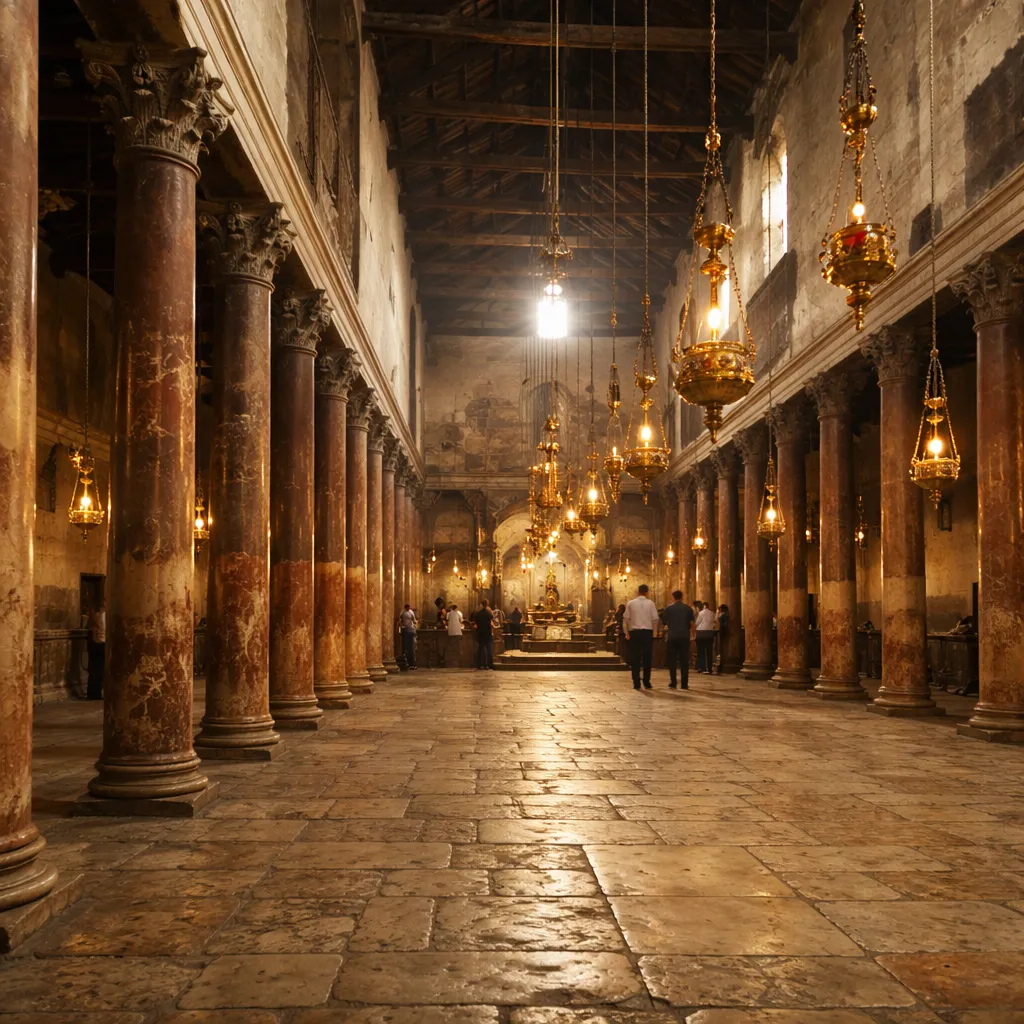
The Church of the Nativity stands over the cave tradition has identified as the birthplace of Jesus since the second century. The entrance is a low doorway, deliberately built small centuries ago to prevent people riding horses inside. You have to duck to enter. Your group will laugh at this, and then feel the weight of it.
The cave beneath the church is accessible through a stairway. At the center of the cave floor is a fourteen-pointed silver star marking the traditional spot of the birth. You will probably need to wait in line. The space is small and the wait gives you time to think about what you are waiting to see.
Luke 2:6-7 is spare: “While they were there, the time came for the baby to be born, and she gave birth to her firstborn, a son. She wrapped him in cloths and placed him in a manger, because there was no guest room available for them.” The economy of the language matches the economy of the place. Nothing about it was grand, except who it was.
Shepherd’s Field is a short drive away, and less crowded. The fields are open and you can see the hills around them. The Franciscan chapel there is small. Standing in the open air at Shepherd’s Field and reading the angel’s announcement in Luke 2:10-11 out loud is one of the simpler and more genuine devotional moments of any Holy Land itinerary. If your group is traveling in December or early January, the guide to Christmas in Bethlehem goes deep on what the city looks like at Christmas, how to attend Midnight Mass, and how to plan around the three Christmas dates.
Leading group devotions on site
The structure that works best for most church groups is this: the tour guide gives the historical and geographical context first, then steps back, and the pastor or a designated group member leads the devotional reflection. Keep the devotion to five or seven minutes at most. The site itself is doing most of the work.
A few practical notes from experience. First, gather your group in a circle or semicircle rather than having them stand in a loose cluster looking at their phones. Physical posture matters. Second, ask someone to read the Scripture text aloud rather than reading it yourself. Hearing a familiar voice from within the group read the words in place gives it a different quality. Third, end with one question, not a list of questions. One question that you let hang in the air for thirty seconds before you close in prayer.
What to avoid: long sermons at sites. You will be tempted to say everything you have prepared about a given location. Resist it. The best devotional moments in the Holy Land are short, specific, and leave room. The site speaks. Your job is to create the conditions for the group to hear it.
For groups that include skeptics or seekers, frame devotional times as invitation rather than instruction. “I want to offer a reflection, and then some time for quiet” lands differently than “We’re now going to have a devotional.” Small distinction, but it changes who feels included.
Structuring worship moments
Sunday in Jerusalem, if your itinerary includes it, can be extraordinary. The Armenian Patriarchate Cathedral of Saint James holds Sunday services that include ancient liturgy, incense, and music that has not changed significantly in centuries. Even if your group has no liturgical background, attending a service in the Old City is worth the experience.
Communion at the Garden Tomb is a tradition many groups practice, and the staff there support it. Bring a simple communion set from home, or check whether your tour operator can arrange it. Sitting in the open air in that garden, with bread and wine, and reading 1 Corinthians 11:23-26 together is one of those moments that transfers directly back into your congregation’s home worship life.
Singing at the Sea of Galilee, on the water or at the shore, at dawn or just before sunset, lands differently than singing in a sanctuary. The acoustics are open. There is no reverb. You hear every voice separately and together at once. If your group has a worship team, this is where they earn their place on the trip. If not, unaccompanied voices work fine.
The Shabbat experience, if your trip includes a Friday evening, is worth seeking out in a Jewish neighborhood rather than simply acknowledging in passing. The whole rhythm of Jerusalem changes as Shabbat begins. Understanding the Sabbath as Jesus observed it, as a practice of rest and trust rooted in Exodus 20:8-11, changes how you read every Gospel account set on a Sabbath day.
Returning home well
The week after a pilgrimage can be disorienting. People come home from the Holy Land changed, or partly changed, or confused about why they feel flat now that they are back. Plan for this.
Build a re-entry gathering into your trip timeline. Two weeks after you return, bring the group back together. Share photos, share reflections, and ask one question: what do you want to carry back into your regular life from what you experienced there? This is where the trip becomes formative rather than just memorable.
The temptation, especially for pastors, is to harvest the trip for sermon material. The footage and photos and impressions become raw material for Sunday mornings, and that is fine, but not at the expense of letting the experience change you personally. The most powerful thing you can offer your congregation when you return is not better sermons. It is a pastor who has been somewhere real and come back changed.
Jesus told the disciples to go to Jerusalem, wait, and then go out to the world (Acts 1:4,8). The sequence matters. You go to the place, you receive something, and then you carry it out. A pilgrimage follows the same structure. Go. Receive. Carry it home.