Church groups can be baptized in the Jordan River at two main sites: Yardenit Baptismal Site near the Sea of Galilee (accessible, full facilities, no advance booking required for individuals) and Qasr el-Yahud near Jericho (historically significant, requires advance coordination for groups).
There is a moment just before someone goes under the water. They are standing waist-deep in the Jordan, the pastor has one hand behind their back and one raised, and the person’s face does something you do not expect. The fear leaves. What replaces it is hard to name, but it is not performance. It is the look of someone who has decided something, finally and completely.
I have watched this happen more times than I can count at the Jordan River. It is one of the few moments on a pilgrimage when nothing needs to be explained or set up. The theology and the experience arrive together, and the group standing on the bank already knows what they are seeing.
If your church is planning a trip to Israel and you are trying to understand how a Jordan River baptism actually works, this guide covers the practical and devotional side of it, from the two main sites to what you say when you step into the water.
The weight of the site
Matthew 3 is where the story starts. John is baptizing in the Jordan, crowds are coming from Jerusalem and all Judea, and then Jesus appears and asks to be baptized. John resists. Jesus insists. And when Jesus comes up out of the water, “heaven was opened, and he saw the Spirit of God descending like a dove and alighting on him. And a voice from heaven said, ‘This is my Son, whom I love; with him I am well pleased’” (Matthew 3:16-17).
That moment, whatever else you say about it, happened in a river. A specific, physical, geographical river. The same river your group will stand in.
That is not a small thing. It does not mean the water is magical or that your baptism is more valid because of where it happens. But human beings are embodied creatures, and the body knows when it is somewhere significant. Standing in the Jordan River and thinking about Matthew 3 is different from reading Matthew 3 at home, in the same way that standing at the edge of the Sea of Galilee is different from looking at a map of it.
For a fuller account of how that embodied quality of pilgrimage works across every site in Israel, the complete spiritual guide to Holy Land pilgrimage gives it the space it deserves.
Reflection: Jesus did not need to be baptized. He chose to step into the water anyway, in solidarity with the people standing on the banks. Who in your own community needs you to step into something alongside them?
Yardenit: what you will actually find
The Yardenit Baptismal Site sits at the southern end of the Sea of Galilee, where the Jordan River begins its flow south toward the Dead Sea. The drive from Tiberias takes about fifteen minutes. When you arrive, you pass through a courtyard with a covered walkway displaying John 3:5 in dozens of languages, tiled in ceramic along the walls. It is the first signal that you are somewhere that has been receiving pilgrims from all over the world for a very long time.
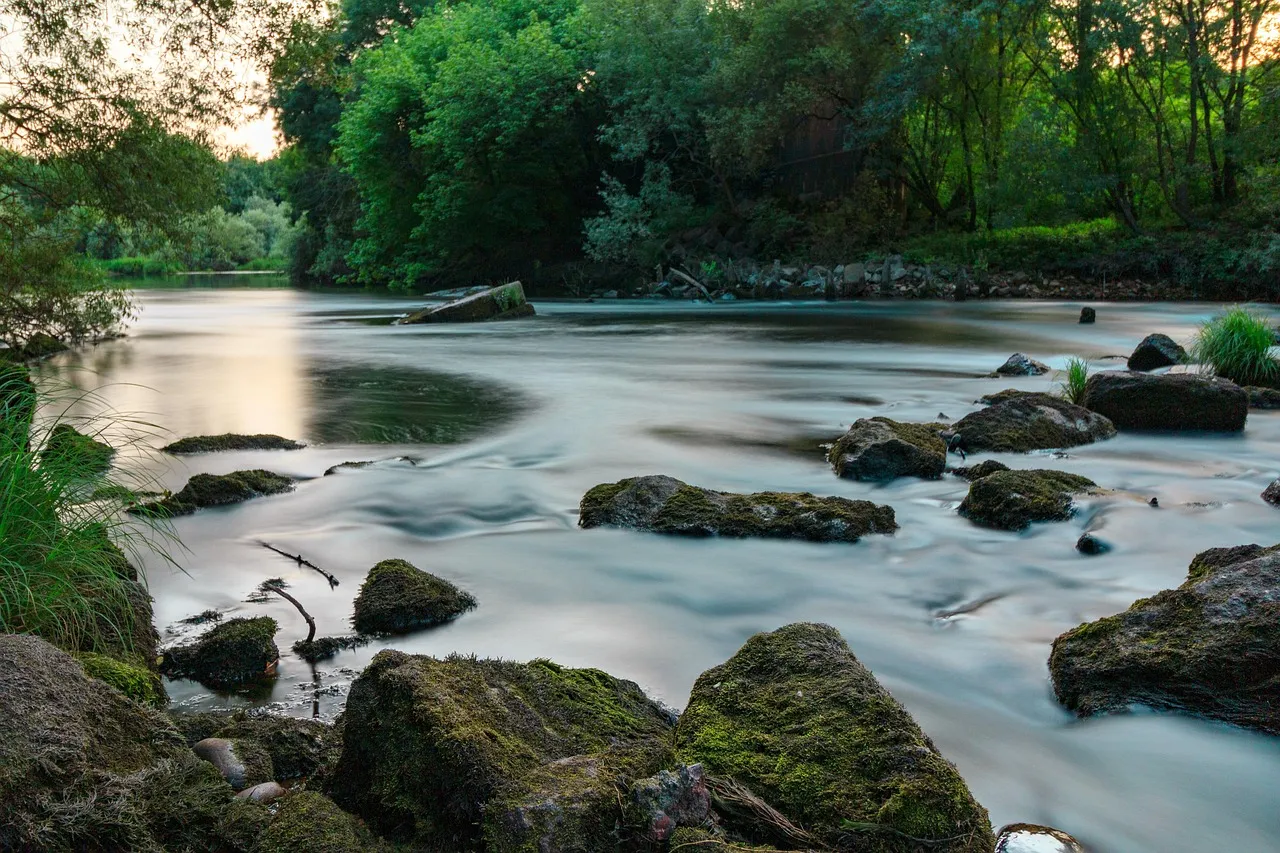
The water itself is green-brown and clear, shaded by eucalyptus trees and reeds that grow along both banks. The Jordan at this point is not the wide, powerful river the name might suggest. It is maybe thirty feet across, calm, and cool. Stone steps with handrails lead down into the water at a gentle slope, which matters practically for older congregation members or anyone who is not comfortable in open water.
On a busy morning, you might arrive to find several groups already in the water simultaneously. Greek Orthodox pilgrims in white robes. A Korean congregation singing together from the bank. An American family, the father baptizing his teenage son while the rest stand watching in the shallow edge. The scene is often plural and unrehearsed, and somehow that adds to it rather than taking away from it.
The facilities are practical and well-kept. Clean changing rooms, lockers you can rent, showers, and a shop where you can buy white robes in several sizes. There is also a café and a gift shop if your group needs a few minutes to collect themselves afterward.
Qasr el-Yahud: closer to where it happened
Qasr el-Yahud is about a forty-minute drive south of Jericho, in the Jordan Valley, near the site where most scholars believe John the Baptist was actually working. The name means “Palace of the Jews” in Arabic, a reference to the crossing of the Jordan by the Israelites under Joshua. The site has been accessible to Christian pilgrims since the Israeli government completed a demining process and opened it to the public in 2011.
The atmosphere here is different from Yardenit. The vegetation is denser, the banks more overgrown, the light filtered through a canopy of tamarisk and oleander. The water is slower here than at Yardenit and the current is visible. There are facilities, including changing rooms and steps into the water, but the site is less polished than Yardenit.
What Qasr el-Yahud offers that Yardenit does not is proximity to the historical event. When you stand in the water here and read Matthew 3, you are in the geography where it is most likely to have taken place. For groups that care about that specificity, it matters.
The trade-off is logistics. Qasr el-Yahud requires more advance planning than Yardenit, and transportation from the main pilgrimage centers in Galilee or Jerusalem adds time to your itinerary. For large groups, permits and coordination through your tour operator are necessary. Incorporating this site works best in longer itineraries, and a 10-day Israel church itinerary that includes both Galilee and the Jordan Valley can accommodate it without cramping the rest of the schedule.
My honest recommendation: if your group has first-time baptism candidates and you want the ceremony to feel accessible and joyful, Yardenit is the right choice. If you have a group of seasoned pilgrims who want the added weight of historical proximity, Qasr el-Yahud is worth the extra planning.
How to plan the ceremony
The Jordan River baptism works best when it is the devotional centerpiece of your trip, not a scheduled item between two other stops. Give it room.
A well-paced ceremony for a group of twenty to thirty people, where several members are being baptized, takes ninety minutes to two hours. That includes time to gather at the site and get oriented, the pre-baptism Scripture reading and devotion, robing and preparation, the baptisms themselves, time for the group to respond after each one, and a closing prayer or song. If you rush it, you will feel it. So will the people being baptized.
Schedule nothing for the two hours that follow. This is not logistical caution. It is pastoral wisdom. People need time after something like this to sit with what happened, to talk to each other, to pray, to be quiet. The Jordan baptism on a rushed itinerary is a missed opportunity. The Jordan baptism with space around it is the moment your congregation will talk about for years.
For the organizational side of structuring a trip around a baptism and other devotional moments, the complete guide to church pilgrimage planning covers the logistics in detail, including how to communicate the significance of these moments to your church before you leave.
Reflection: What would it look like in your church back home to treat baptism with this kind of unhurried weight? What has to change for that to happen?
A guide for pastors: leading the ceremony
You do not need to do anything elaborate. The Jordan does most of the work.
Begin your group on the bank, before anyone changes or goes into the water. Have everyone gather in a circle if the space allows, or in a loose semicircle facing the river. Read Matthew 3:13-17 aloud, slowly. Pause after verse 17. Let the words land.
Then read Romans 6:3-4: “Don’t you know that all of us who were baptized into Christ Jesus were baptized into his death? We were therefore buried with him through baptism into death in order that, just as Christ was raised from the dead through the glory of the Father, we too may live a new life.” Romans 6 is where Paul spells out what baptism actually does. Say something brief about it, two or three minutes at most, and then send people to change.
When the candidates are robed and in the water, bring the whole group to the bank. If your tradition asks candidates to make a public profession before going under, do that here. Keep the questions simple. “Do you confess Jesus Christ as Lord?” The simplicity is the point. There is nothing complicated happening in this moment, theologically. What is complicated is the decision. The words just mark it.
After each baptism, let the group respond. Some congregations cheer. Some sing a phrase of a worship song. Some simply applaud. Whatever your tradition is, let it be unself-conscious. The people on the bank are witnesses, and witnesses are not meant to be silent.
After all the baptisms, gather the group once more. Ask the newly baptized to face the group. Read one sentence: “Therefore, if anyone is in Christ, the new creation has come: The old has gone, the new is here” (2 Corinthians 5:17). Then close in prayer. Keep the prayer short. The moment does not need decoration.
What to tell first-time baptism candidates
If you have congregation members coming to the Jordan who have never been baptized, or who were baptized as infants and want to make a conscious adult declaration, they will have questions and feelings they may not know how to articulate.
Tell them this: what they are about to do is not a performance. It is not primarily for the group watching on the bank, though the witnesses matter. It is a declaration, made in a physical act in a physical place, that something is true about their life. They belong to Christ. That has been true whether or not they have said it in water. The baptism names it.
Some people worry they will not feel anything. Tell them that is fine. The act is not contingent on the emotion. What happens in the Jordan River is real regardless of whether they weep or feel perfectly calm. But tell them also that many people are surprised by what surfaces when they stand in that water. Some grief. Some relief. Some joy that feels almost too large. None of that is wrong. All of it is welcome.
Tell them to pay attention to the moment they come up out of the water. Not to perform a reaction, but to notice what is actually there. That moment, in my experience, is the one that stays.
The emotional reality
I want to say something honest about why people weep at the Jordan, because if you have not seen it you might be unprepared for it.
It is not sentiment. It is not that Israel is beautiful, though it is. It is not the cumulative effect of a trip that has been moving in small ways. The Jordan hits differently because baptism, at its core, is about dying and coming back. You go under. You come up. The language of Romans 6 is not metaphorical softening. Paul means it literally: this is a burial and a resurrection, acted out in water.
When someone who has been carrying shame, or long-held doubt, or the weight of a life they are trying to leave behind goes under the Jordan River, something happens in the body that corresponds to what is happening in the spirit. The water is real. The moment is real. The declaration is real. And the body, which has been waiting for this, responds.
Your job as a pastor-leader is not to manage that emotion or guide it toward the right expression. Your job is to create the conditions for it and then step back. Let people cry. Let people laugh. Let the newly baptized hug each other while still dripping. Resist the impulse to immediately say something theological and fill the silence. The silence after a baptism in the Jordan is not empty. It is full.
Photography and video
Most groups want photographs and video of the baptisms, and that is reasonable. You will want a record of this.
Designate one or two people specifically to document the ceremony, so that the rest of the group can be present rather than filming on their phones. Ask them to capture the expressions on the bank as much as the ones in the water. Some of the most important photographs from a Jordan baptism are the faces of the people watching.
Ask the photographers to shoot before the ceremony begins and after it ends, but to hold back during the moment itself. There is a version of the Jordan River baptism that becomes a photo opportunity, and there is a version that becomes a sacrament. The difference is often in whether the cameras are out when the person goes under.
Brief your group on this before you arrive. You can acknowledge the phones directly: “We have a photographer today. For the next hour, I am asking everyone else to keep your phones in your pockets. Be here. Watch. Pray.” Most people are relieved to have that permission.
Practical things you will want to know
Water temperature at Yardenit is cool year-round, typically around 65-70 degrees Fahrenheit, fed by snowmelt from Mount Hermon. It is not cold enough to be uncomfortable for most people, but enough to be bracing. In summer the air temperature makes the water feel refreshing. In January it will feel sharp.
The stone steps at Yardenit are textured and have good grip, but they are stones and they are wet. Anyone with mobility concerns should be accompanied into the water by a steady hand. The site is well set up for this.
White robes at Yardenit are available in sizes from small to extra-large. If you have members of your group outside that range, or if you prefer the symbolic continuity of everyone wearing the same garment from home, bring your own. They do not need to be elaborate. Simple white cotton works fine.
Afterward, the wet robes need somewhere to go. Bring a few large plastic bags. Wet cotton is heavy and will soak through a regular bag.
If any of your candidates have physical conditions that make full immersion difficult, speak with the site staff. There is pastoral flexibility in how baptism is administered, and the site staff have seen every situation. They will not make it complicated.
Where the Jordan baptism fits in your itinerary
Yardenit is geographically positioned between the Galilee sites in the north and the Jerusalem sites in the south, which gives you a natural placement: at the end of your Galilee days, before the group travels toward Jerusalem.
This sequencing has a spiritual logic to it. Your group spends time at Capernaum and the Mount of Beatitudes and the Sea of Galilee, absorbing the ministry of Jesus, and then they mark that with an act of commitment before entering the holy city. The Jordan becomes the threshold between the two halves of the trip.
For groups doing a shorter tour, the baptism still anchors whatever time you have. Even in a seven-day itinerary, if you protect the time at the Jordan and do not let it get squeezed, it will be the moment your congregation carries home. Groups traveling in December often pair it with a Christmas pilgrimage to Bethlehem in the days before or after Jerusalem, which gives the baptism a natural place at the midpoint of the trip.
Reflection: When your group arrives back home and someone asks what the trip was like, what do you want them to say about the Jordan? What needs to be in place for that to be true?
The Jordan River is not a dramatic landscape. It is green and quiet and narrower than people expect. But something about its ordinariness works in its favor. It does not overwhelm you with grandeur before you get in. It just waits. And when you step into it, the weight of everything it has witnessed, every declaration and every burial and every resurrection acted out in its water, comes up to meet you.
That is what your congregation is stepping into. Make sure they have the time and space to feel it.