Shabbat in Israel runs from Friday sundown to Saturday nightfall and closes public buses, trains, most Jewish-owned shops, and many restaurants in Jerusalem, while Tel Aviv is largely unaffected. Hotels, Arab-owned businesses, Old City sites, and ride-hailing apps like Gett remain available throughout.
This Shabbat guide for Christian visitors covers the practical shape of it — every pilgrim group hits the surprise eventually. You arrive in Jerusalem on a Friday, you need to buy water and snacks for the next morning, and the supermarket is locked at 4pm with no explanation. Or you try to call a bus and learn there are no buses. Or the hotel elevator stops at every floor automatically and nobody told you why.
Shabbat is not complicated once you understand the basic shape of it. But it does change how a 25-hour window of your trip works, and a bit of advance knowledge means you spend that time well instead of hungry and confused.
What Shabbat actually is
Shabbat is the Jewish day of rest, observed weekly from Friday sundown to Saturday nightfall. It is the fourth commandment in the Torah, and in Israel it shapes the national rhythm in a way that has no direct equivalent anywhere else. This is not a ceremonial formality. Shabbat is genuinely observed, at varying degrees of intensity, by a significant portion of the Jewish population, and its effects on infrastructure are written into law.
The day lasts roughly 25 hours. In summer, sundown comes late, so Shabbat might start at 8pm on a Friday in July. In winter, it can begin at 4:30pm. The city of Jerusalem broadcasts a two-minute siren when Shabbat begins, the same siren for decades, and people who grew up here still feel something when they hear it. Saturday night ends with a ceremony called Havdalah, which involves a braided candle, a spice box, and a cup of wine. After Havdalah, the week resumes.
For a Christian visitor, the parallel to Sunday observance is real but imperfect. Sunday in most Western countries has largely shed its legal and commercial restrictions. Shabbat in Israel has not. It is still structurally enforced through transport schedules, business closures, and community norms, especially in Jerusalem.
The Friday afternoon rush
Go to Mahane Yehuda Market on a Friday morning and you will see what Shabbat preparation looks like in practice. By 10am, the market is already dense with people buying produce, challah bread, wine, fresh fish, and flowers. By noon, things are moving fast. The vendors who observe Shabbat start closing their stalls around 2-3pm. The cheese vendor, the butcher, the spice stalls on the inner alleyways — they pack up and go home.
By 3:30pm on a Friday in Jerusalem in winter, the streets are noticeably quieter. The supermarkets (Rami Levy, Shufersal) close. Most Jewish-owned shops pull down their shutters. Traffic drops. The city changes its register.
The siren sounds at sundown. After that, the streets in religious neighborhoods like Mea Shearim and Geula are entirely empty of cars. Families are walking to synagogue in their Shabbat clothes. The smell of cholent (a slow-cooked stew left overnight) drifts out of apartment windows.
If you are in Jerusalem for this moment, stop and pay attention to it. It is not performance, it is not for tourists. It is a city collectively deciding to stop, once a week, and it happens whether you are watching or not.
Jerusalem Shabbat vs. Tel Aviv Shabbat
These are two different experiences.
Jerusalem shuts down meaningfully. The Old City itself stays partially open — more on that below — but West Jerusalem closes hard on Friday afternoon. Jewish-owned restaurants may close, bars in the center of town may close, and the streets in the central neighborhoods feel emptied out by Saturday morning. The market is closed. The government offices and malls are closed. The buses stop.
Tel Aviv does not particularly notice Shabbat. Restaurants stay open. Bars stay open. The beach is busy on Saturday morning with Israelis who do not observe. The Carmel Market is closed on Saturday, but the restaurants on Rothschild Boulevard and the coffee shops in Florentin run their normal Saturday service. Visiting Tel Aviv on Shabbat, you might not realize the day is happening at all unless you try to take a city bus.
This is one of the fundamental cultural differences between the two cities, and it is a real one. Tel Aviv is a secular city that treats Shabbat the way New York treats Sunday. Jerusalem is a city where Shabbat shapes the week, even for people who are not religious. If your itinerary puts you in Jerusalem over a weekend, plan for it. If you are in Tel Aviv, plan for it only in terms of transport.
For more on navigating Tel Aviv as a Christian visitor, including which neighborhoods to stay in and where to eat, the Tel Aviv guide for Christian visitors covers it specifically.
What closes, and what does not
In Jerusalem and observant cities on Friday afternoon through Saturday night:
Public buses stop running. The Egged and Dan networks suspend service from before Shabbat until after it ends Saturday night. The national rail network (Israel Railways) also suspends service. Light rail in Jerusalem stops.
Most Jewish-owned businesses close. This means supermarkets, pharmacies attached to chains, malls, clothing shops, most souvenir shops in West Jerusalem, and many restaurants.
Government offices and banks are closed, though they are also closed on Saturday regardless of Shabbat.
What stays open: hotels, fully operational throughout. Arab-owned businesses in East Jerusalem, the Muslim Quarter, the Christian Quarter, and the Armenian Quarter operate normally on Saturday — this is their regular workday. Pharmacies in Arab East Jerusalem are open. The tourist-facing shops and food stalls in the Muslim Quarter souk are open. The Church of the Holy Sepulchre is open and holds services.
In Tel Aviv, almost everything stays open. The main exception is Carmel Market (Shuk HaCarmel), which is closed Saturday, and a smaller number of family businesses that observe. Most restaurants, coffee shops, bars, and tourist attractions operate normally.
Getting around on Shabbat
No intercity buses. No city buses in Jerusalem. No trains. This is the practical reality, and it catches people off guard.
For getting around within Jerusalem on Saturday, your options are Gett (the Israeli taxi app, available on Android and iOS at gett.com), calling a private taxi company, or walking. The Old City is entirely walkable from most central hotels. The Mount of Olives is a short taxi ride. The Israel Museum is a 20-minute walk from Jaffa Road or a short taxi.
Gett on Shabbat costs more than a regular fare. There is a legally permitted Shabbat surcharge — expect to pay roughly 25% more than a weekday fare. Drivers are available; there is no shortage of secular Israeli taxi drivers who work Shabbat.
If you need to travel between cities on Saturday, meaning Jerusalem to Tel Aviv, Jerusalem to the airport, or anywhere involving the highway, book a private transfer in advance. Your tour operator or hotel concierge can arrange this. Do not assume you can sort it out Saturday morning.
Ben Gurion Airport operates on Shabbat. Flights depart and arrive. Getting to the airport on Saturday requires a private transfer booked ahead, since the train and shared bus services do not run. This is a logistics detail worth confirming with your tour operator when you book.
The Shabbat elevator
Many hotels and apartment buildings in Israel have a “Shabbat elevator” — an elevator that, during Shabbat, automatically stops at every floor without anyone pressing a button. The doors open, passengers get on or off, the doors close, and it moves to the next floor.
This exists because traditional Jewish law prohibits operating electrical switches on Shabbat, and pressing an elevator button counts. The Shabbat elevator removes that act from the equation by running on a timer.
For non-observant visitors, this is a minor inconvenience. A ride from the lobby to the 8th floor stops at floors 1, 2, 3, 4, 5, 6, 7, and 8. Budget an extra few minutes if your hotel elevator is running in Shabbat mode.
The regular elevator still exists alongside the Shabbat elevator in most buildings. If you are in a hurry, use the stairs or take the regular elevator, which runs normally for non-observant guests. Nobody will stop you.
The Old City on Shabbat
Saturday morning in the Old City of Jerusalem is one of the better times to visit.
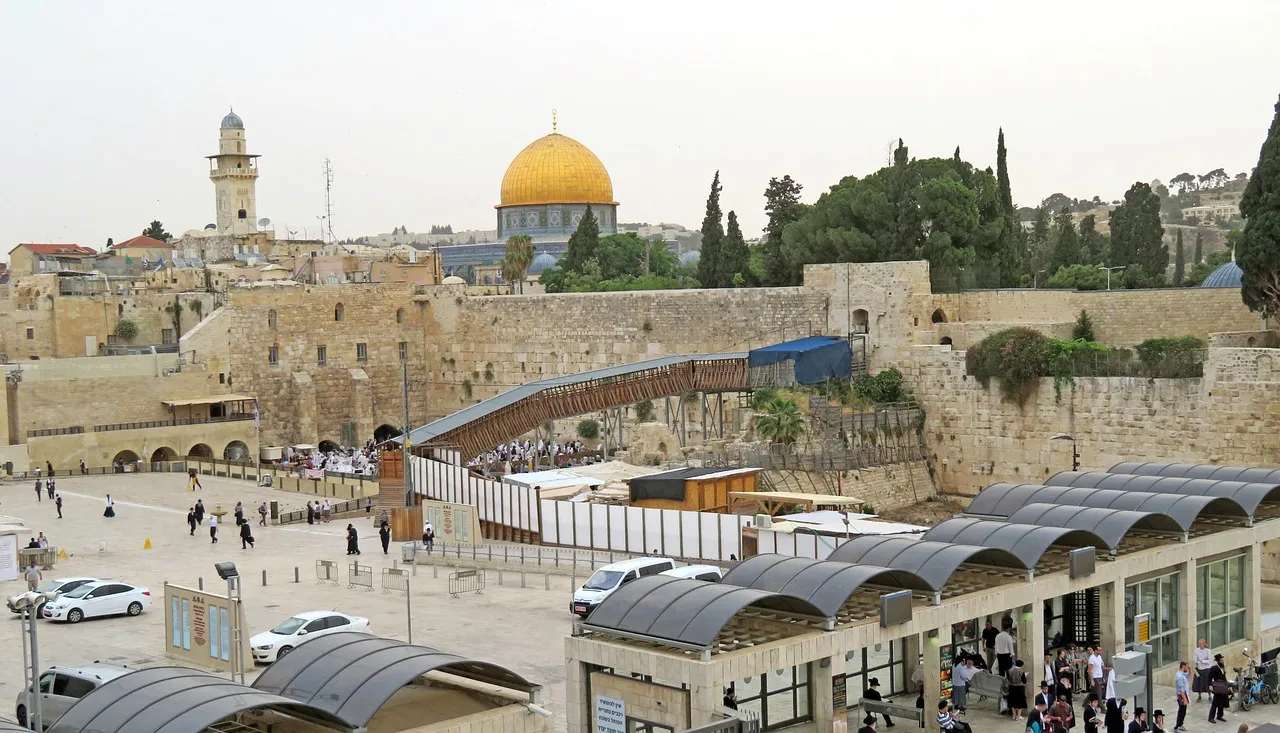
The Western Wall plaza on Saturday morning has Shabbat prayers, which you can watch respectfully from the plaza. The atmosphere is different from a weekday: men in tallit (prayer shawls), families gathered at the wall, a quieter and more devotional energy than the tourist-heavy weekday crowds.
The Jewish Quarter streets are largely empty on Saturday morning since residents are in synagogue or resting. This is the one time you can walk those streets without navigating foot traffic.
The Muslim Quarter souk is open and operating normally. The food stalls near Damascus Gate are selling falafel and sesame bread (ka’ak) as usual. The Christian Quarter is open. The Church of the Holy Sepulchre holds Saturday morning services.
By late Saturday afternoon, as Shabbat ends and the rest of the city opens back up, the Jewish Quarter comes alive again — people are out walking, cafes and restaurants are reopening, and the general energy of a Jerusalem Saturday evening is different from any other night of the week.
What not to do
Do not drive through Mea Shearim or Geula on Shabbat. These are ultra-Orthodox neighborhoods in West Jerusalem where Shabbat is strictly observed. Cars driving through during Shabbat have historically been met with hostility, including on rare occasions thrown objects. This is not the norm for most of Israel, but in these specific neighborhoods on Shabbat, driving is genuinely unwelcome. Walk if you want to see these areas, and dress modestly.
On photography: at the Western Wall, photography on Shabbat is a sensitive issue. The Western Wall Heritage Foundation technically prohibits photography on Shabbat, and you will see signs. Observant visitors will find this request easy to follow. Some tourists do photograph the wall on Shabbat regardless; this causes friction. Leave the camera in your pocket for that particular visit and use the rest of your Saturday for photos elsewhere.
Do not assume all of Jerusalem operates the same way. Arab East Jerusalem, Jaffa Road near the central bus station, and neighborhoods with a mixed or less observant population are less affected by Shabbat closures than the city center and ultra-Orthodox areas.
Planning around Shabbat
The practical version, in order:
Do your supermarket run and any shopping that requires open stores on Thursday evening or Friday morning. By Friday afternoon in Jerusalem, you are locked out of most supermarkets until Saturday night.
Plan your Friday night meal in advance. Your hotel’s restaurant will be open and will likely be serving a Shabbat dinner, which at Jewish-heritage hotels means challah bread, soup, fish, and the full Friday night spread. It is worth eating this at least once. If your hotel does not serve dinner or you want something different, identify the restaurant before Friday afternoon, since your options narrow quickly once Shabbat starts.
If you need transport on Saturday, book it the day before. Do not assume you can flag a taxi from a busy area — you can in Tel Aviv, but in Jerusalem it is harder on Saturday morning, and if you have a specific time commitment (airport, day trip departure), arranging in advance avoids real stress.
Use Saturday as a slow day. The Western Wall, the Old City, the Mount of Olives, and most of the significant pilgrimage sites are open and accessible. The crowds, particularly for tourists and not for Shabbat observers, can actually be lighter on Saturday morning than a busy weekday. The sites are not going anywhere.
Shabbat and the Christian sabbath
Christians who practice a Sunday sabbath will find something familiar here, even if the logistics are different. The principle is the same: one day in seven set aside, work stopped, attention redirected. The rhythm of Friday afternoon preparation, the siren marking the start, the family-oriented Friday night, and the slower pace of Saturday morning are all legible through a Christian lens.
What feels foreign is the scale. This is not one family’s practice — it is a national infrastructure pause. The country genuinely stops. Churches and theological traditions that take sabbath seriously often find Shabbat in Jerusalem one of the more spiritually resonant parts of the trip, not for any theological alignment but simply because it demonstrates, on a citywide scale, that stopping for one day is actually possible.
For groups coming with a strong interest in Jewish-Christian understanding, Shabbat is worth engaging with intentionally, not just navigating around. Many synagogues in Jerusalem welcome respectful visitors for Friday night services with prior arrangement. Your tour operator can facilitate this if it interests your group.
For the broader logistics of planning a pilgrimage that works around Shabbat and Jewish holidays without losing days to closures, the complete guide to church pilgrimage in Israel covers scheduling in detail, and the 10-day Israel church itinerary shows how to structure a week so Friday and Saturday are used well rather than wasted.
Double Shabbat: when a holiday connects
One logistical situation that catches groups off guard: when a Jewish holiday falls on the day immediately before or after Shabbat, you get what Israelis call a “chag Shabbat” or colloquially a double Shabbat. Two consecutive days of closures and restricted transport.
This happens several times a year. Passover begins on a Friday evening some years, connecting directly into Shabbat. Rosh Hashana sometimes falls Thursday-Friday, meaning Thursday night through Saturday night is essentially three days of holiday-plus-Shabbat closures. Yom Kippur and Shabbat can connect similarly.
During these extended periods, even Tel Aviv quiets down substantially. Yom Kippur is the most extreme example: the entire country, including Tel Aviv, has no cars on the roads (people cycle the highways), all businesses are closed, and the airport operates at minimum staffing. It is one of the most striking things a visitor can witness if they happen to be in Israel for it, but it requires more advance planning than a standard Shabbat.
Check the Hebrew calendar against your travel dates before you book, especially if you are traveling in September-October (high holiday season) or March-April (Passover). A good tour operator will already know this and factor it into the itinerary. The Israel travel guide for Christian visitors includes a section on timing your trip around the Jewish calendar, which is worth reading before you finalize dates.