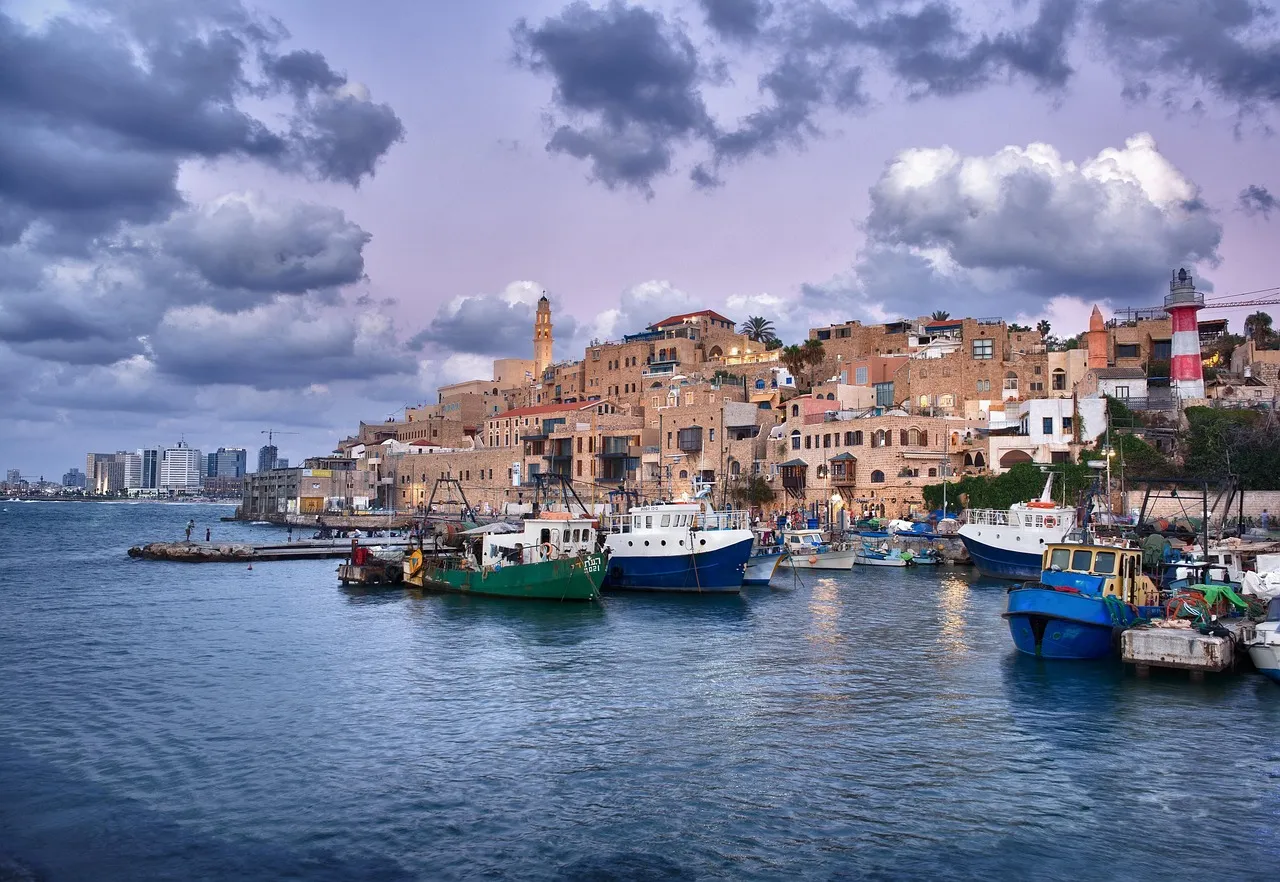
Ancient Jaffa — biblical Joppa — has been a working port for at least 3,500 years. Egyptian records, the Hebrew scriptures, the New Testament, and the reports of Crusader armies all document the same narrow promontory jutting into the Mediterranean, the same harbor sheltered by offshore rocks, the same city that has been destroyed and rebuilt so many times that the accumulated rubble has raised the ground level by several meters above the 1st-century surface. It is one of a handful of places in Israel where the biblical text, the archaeological record, and the living city all occupy the same ground simultaneously.
Most visitors spend half a day here at the tail end of a Tel Aviv extension. That is probably not enough, but it is something. The site rewards attention.
Jaffa in the Bible
The first biblical reference to Joppa is in Joshua 19:46, where it marks the boundary of the territory of Dan. It appears next in 2 Chronicles 2:16, in the context of Solomon’s building project: cedar logs from Lebanon, floated down the coast by Phoenician craftsmen under Hiram of Tyre, arrived at Joppa before being transported overland to Jerusalem. The sea route that made Joppa useful for Solomon was the same route that made it the dominant port of the southern Levantine coast for most of antiquity. There was no natural harbor further south until well into the Roman period, when Herod the Great constructed the entirely artificial harbor at Caesarea Maritima.
The book of Jonah opens at Joppa. Jonah 1:3 says simply that Jonah “went down to Joppa and found a ship going to Tarshish.” The detail is geographically coherent. Joppa was the embarkation point for Mediterranean sea traffic heading west. Whether Tarshish is Tartessos in southern Spain, Sardinia, or somewhere else is a question that remains unresolved in biblical geography, but the departure point is not in question. Joppa is the right port for a westbound voyage.
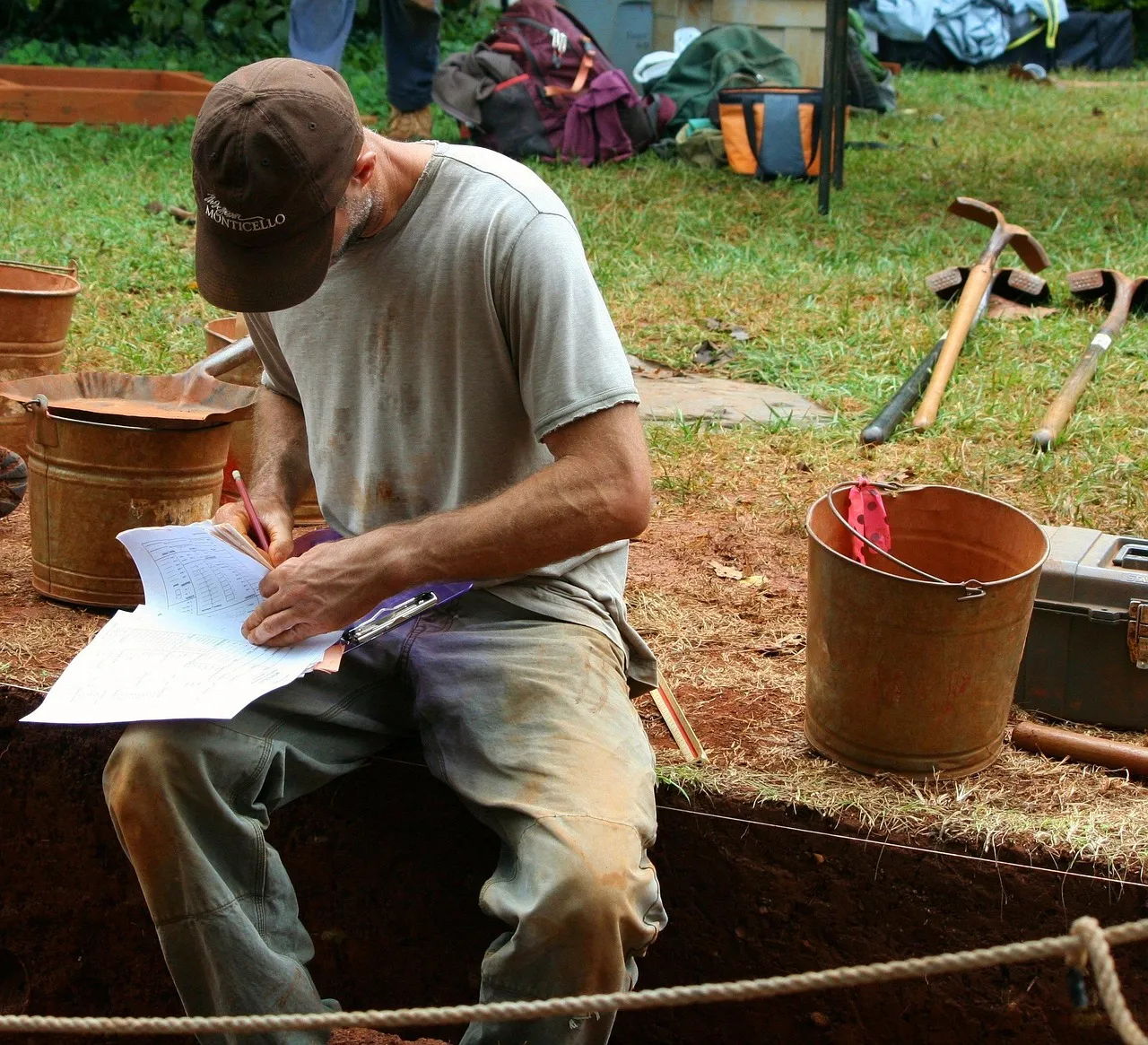
What most visitors don’t know: Jaffa appears in Egyptian records before it appears in the Bible. A papyrus from the reign of Thutmose III (c. 1479-1425 BCE), preserved in a collection in the British Museum, tells a folktale about the capture of Joppa by an Egyptian general. The story is not historically reliable, but the papyrus confirms that Joppa was sufficiently important to Egyptians in the 15th century BCE that they built stories around capturing it. The actual Egyptian administrative presence at Jaffa is documented by the archaeological record, not just by folktales.
Peter in Joppa
Acts 9:36 introduces Tabitha (rendered in Greek as Dorcas, both names meaning “gazelle”), a disciple in Joppa known for making garments for widows in the community. When she dies, the community sends for Peter, who is in nearby Lydda. Peter comes, clears the room, prays, and she rises. The account in Acts 9:36-42 is one of the more specific resurrection narratives in the New Testament, with named individuals, a named city, and a named trade (Simon the Tanner, whose house Peter then stays in).
What follows is theologically the most consequential event in Christian history after the resurrection itself, and Jaffa is where it happened.
Acts 10 records that while Peter was on Simon the Tanner’s rooftop praying around noon, he saw a vision: a large sheet descending from heaven containing animals that Jewish dietary law classified as unclean, and a voice telling him to kill and eat. Peter refuses, three times, citing the law. The voice responds: “What God has made clean, do not call common.” Then three men arrive at the gate, sent by a Roman centurion named Cornelius in Caesarea. Peter goes with them.
The conversion of Cornelius that follows is the moment Acts marks as the definitive opening of the early Jesus movement to non-Jews. Peter’s speech at Cornelius’s house in Acts 10:34-35 is explicit: “I truly understand that God shows no partiality, but in every nation anyone who fears him and does what is right is acceptable to him.” The Jerusalem church initially challenges Peter on this (Acts 11:1-18). He recounts the vision again. They accept it.
The argument that this account in Acts 10 represents the decisive theological break that made Christianity a universal rather than a Jewish sectarian movement is not a minority view. It is the mainstream reading of this passage among New Testament historians, including James D.G. Dunn of Durham University, whose two-volume “Christianity in the Making” (2006) examines the evidence in detail. The vision did not happen at the Church of the Holy Sepulchre, or on the Via Dolorosa, or at the Sea of Galilee. It happened on a tanner’s rooftop in Joppa, in a neighborhood that smelled of hides and sea salt.
Archaeological Jaffa
The mound of Tel Jaffa rises approximately 40 meters above sea level at its highest point, inside the current Old City. The accumulated occupation layers beneath Old Jaffa represent one of the longest continuous settlement sequences on the Israeli coast.
Trude Dothan of Hebrew University conducted excavations at Tel Jaffa in the 1950s and documented Bronze Age occupation levels. The Egyptian Gate complex, dating to the 13th century BCE and associated with Ramesses II, is the most significant find from the Egyptian administrative period. The gate architecture, with its distinctive mud-brick construction and monumental proportions, matches Egyptian New Kingdom administrative structures found elsewhere in Canaan. Inscribed architectural fragments bearing Ramesses II’s cartouche were recovered from the site, confirming the Egyptian identity of the installation.
Since 2011, the Tel Jaffa expedition led by Aaron Burke of UCLA, in partnership with the Israel Antiquities Authority, has been conducting systematic excavations of the tel. Burke’s team has documented occupation from the Middle Bronze Age (roughly 2000-1550 BCE) through the Late Bronze Age, with particular attention to the transition between Canaanite and Egyptian administrative control of the city. Their work has clarified the stratigraphic sequence and confirmed that Jaffa was an Egyptian administrative center in Canaan during the New Kingdom period, not merely a peripheral trading post.
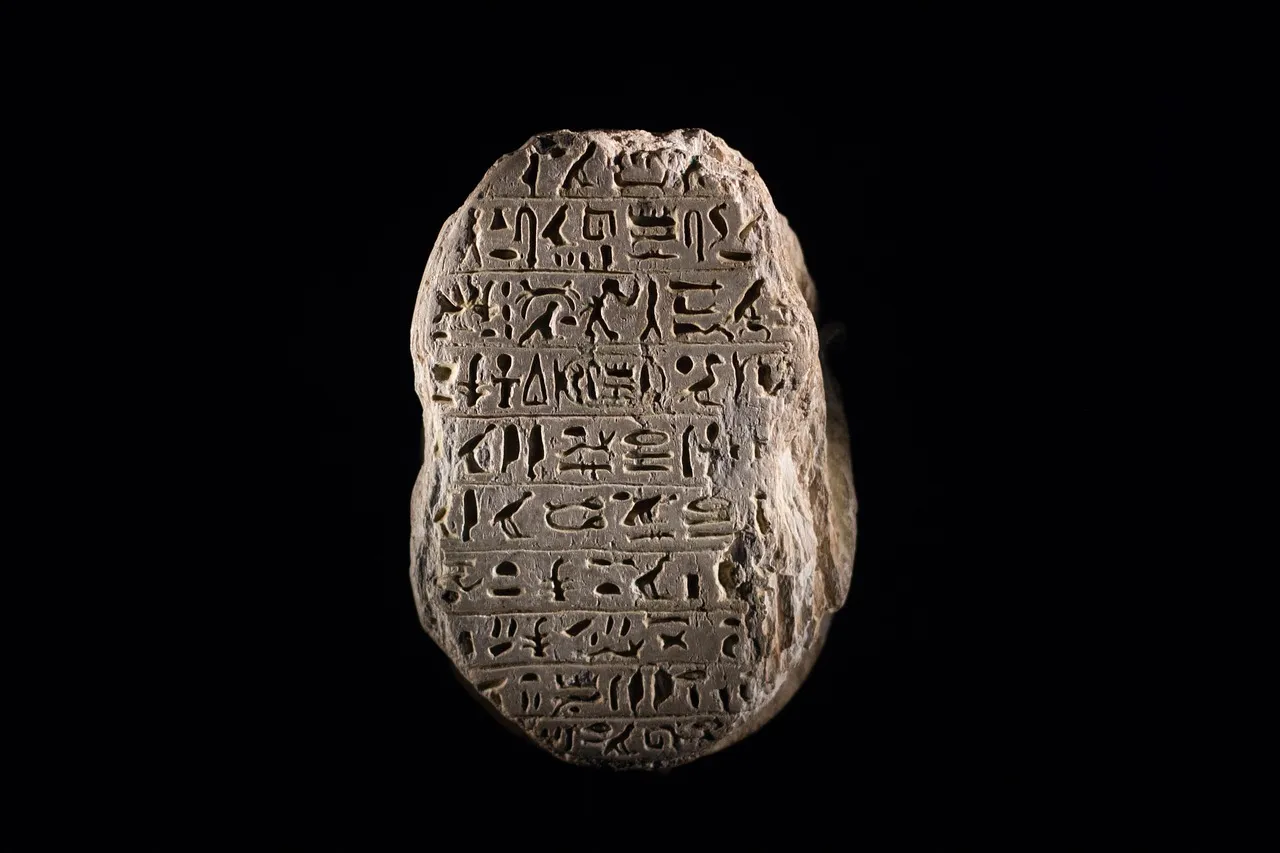
The Hellenistic, Roman, Byzantine, and early Islamic layers at Tel Jaffa are less systematically excavated. Much of Old Jaffa was continuously occupied and built upon through the Ottoman period, which means large areas of the ancient mound are inaccessible beneath standing structures. What 1st-century Joppa looked like at street level, where Peter stayed, where Tabitha lived, remains largely invisible to archaeology. The port infrastructure of the Roman period is better documented; underwater surveys by the Israel Antiquities Authority have identified ancient harbor installations below the current waterline.
What to see in ancient Jaffa today
St. Peter’s Church sits at the highest point of Old Jaffa, directly above the tel, on the site of a Crusader fortress. The current building is Franciscan, completed in 1654 with subsequent modifications, and built over earlier Crusader remains. It is not a 1st-century structure. It is, however, the most atmospheric Christian site in Jaffa, with a clear view of the harbor below and a nave that has absorbed centuries of pilgrimage. Napoleon’s forces used it as a hospital after the 1799 siege of Jaffa. The painting above the altar depicting Peter’s vision — a large sheet descending from the sky — was commissioned in the Franciscan tradition of commemorating the Acts 10 narrative at this specific location.
The Kedumim Square visitors center is directly adjacent to the church, in a subterranean space beneath the square. It displays archaeological finds from various periods of Jaffa’s history and provides good orientation to the site’s stratigraphy. It is the most useful starting point for understanding the depth of occupation beneath your feet. Open Sunday through Thursday, 9am-10pm; Friday and Saturday hours vary.
The old port at the base of the hill is still a working small-craft harbor. The offshore rocks that protected ancient Joppa’s shipping lanes are still there. Josephus described the harbor in “Jewish War” 3.9.3 as dangerous in rough weather because the rocks create a narrow, difficult entrance. That assessment remains accurate today. The harbor is small compared to Caesarea Maritima, which is precisely why Herod built Caesarea: Joppa’s natural harbor could not accommodate the volume of traffic a major Roman port required. In the 1st century BCE, Joppa was already being eclipsed commercially by Caesarea. But it remained occupied, and Acts places Peter here, not at the grander port to the north.
The structure near the port identified as Simon the Tanner’s house has carried that identification since the Byzantine period. The Franciscans maintain it. There is no archaeological evidence connecting this building to a 1st-century tannery or to any person named Simon. The identification is traditional and quite old, but it is tradition. What is historically accurate is the occupational logic: tanners worked near water, and the port district of Joppa is exactly where a tanner would have operated in antiquity.
How to visit Old Jaffa: getting there and planning your time
Old Jaffa is 4 kilometers south of central Tel Aviv. The beachfront promenade runs the full distance, flat and paved, taking 45-60 minutes on foot. It is the best way to approach the site if your group is physically able, because it gives you a sense of the Mediterranean frontage that defined Joppa’s entire history. The taxi ride from central Tel Aviv takes 10-15 minutes depending on traffic.
Most pilgrimage groups visit Jaffa as a half-day addition to a Tel Aviv free afternoon. That works. Allow 2.5 to 3 hours for St. Peter’s Church, Kedumim Square, a walk through the old port, and time on the tel itself. The Jaffa Flea Market immediately northeast of the Old City is worth an hour if your group has appetite for a functioning Middle Eastern market, unrelated to the biblical sites.
The site is in Israeli territory and fully accessible with a standard Israeli entry. There are no entry fees for the outdoor areas of Old Jaffa or the tel. St. Peter’s Church and the Kedumim Square visitors center are free to enter, though the visitors center accepts donations.
A note on sequence: if your group is coming from Jerusalem, Jaffa is naturally paired with a Tel Aviv overnight. If you are traveling the coastal road, Caesarea Maritima and Jaffa work well in the same day, north to south, arriving in Tel Aviv for dinner. The contrast between Herod’s engineered harbor at Caesarea and the ancient natural harbor at Jaffa — older by more than a millennium, smaller, technically inferior, but the port that appears in both Testaments — is worth making explicit to a group. For a full day-by-day framework that includes both sites, see our 10-day Israel church group itinerary.